what preperation needs to be done when screeding a floor
Proper preparation is the foundation of every successful screeding project. At LC Screeding Newcastle, no floor is ever laid without a thorough and methodical preparation process. Serving domestic and commercial clients across the North East of England, the company understands that the long-term performance of a screed floor depends entirely on what happens before the screed is poured.
The first stage of preparation is a detailed assessment of the existing substrate. Every property is different, particularly across the North East where building styles range from modern developments to older terraced housing and industrial units. The base must be inspected for structural soundness, movement, cracks, contamination and moisture levels. Laser levels are used to establish datum points and confirm the required finished floor height. This ensures the correct screed depth is calculated from the outset, preventing issues with thresholds, door clearances or final floor coverings.
Once the assessment is complete, the subfloor must be completely cleared and cleaned. Dust, plaster droppings, loose debris, oil stains, adhesive residue and paint can all prevent proper bonding. Mechanical preparation such as grinding or shot blasting may be required to remove surface laitance or stubborn contaminants. A clean and stable base is essential, as screed will only bond as effectively as the surface beneath it.
Any structural repairs must be addressed before moving forward. Cracks in the concrete base are typically filled using specialist resin repair systems to prevent them from transferring through to the screed layer. Weak or crumbling areas are cut out and reinstated. If movement joints are present, these must be carefully considered and mirrored within the screed design. Screed is not intended to fix structural defects, so stabilising the base at this stage is critical.
Moisture control is another key element of preparation. High moisture levels can cause screed failure, extended drying times and problems with final floor finishes. In many properties across Newcastle and surrounding areas, a damp proof membrane (DPM) will be required. This can be installed as a sheet membrane beneath the screed or applied as a liquid surface membrane depending on site conditions. Moisture testing is carried out to confirm the correct solution is used, ensuring compliance with industry standards.
For floating screed systems, insulation boards are installed over the base or damp proof membrane. These boards must be laid tightly together with no rocking or movement. Gaps are sealed and perimeter edging strip is fitted around walls and columns to allow for expansion. Poorly installed insulation can lead to screed cracking or uneven settlement, so precision at this stage is essential.
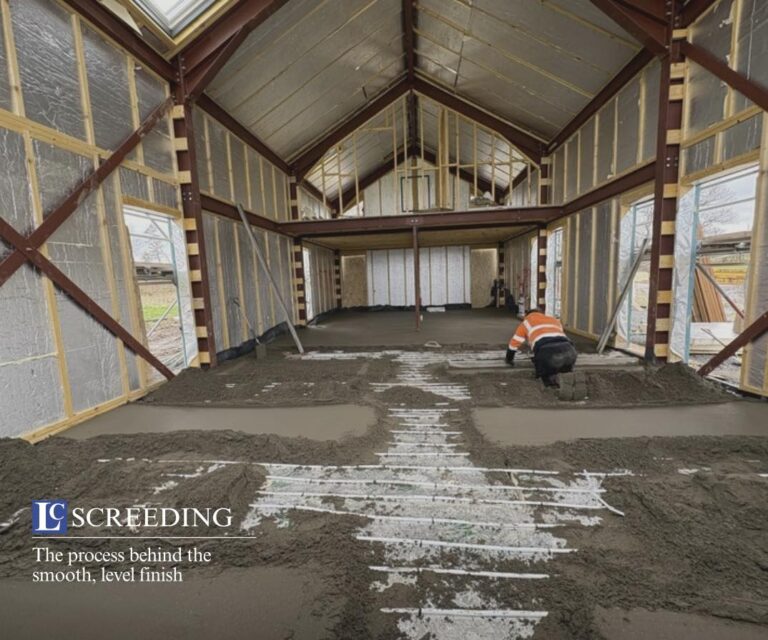
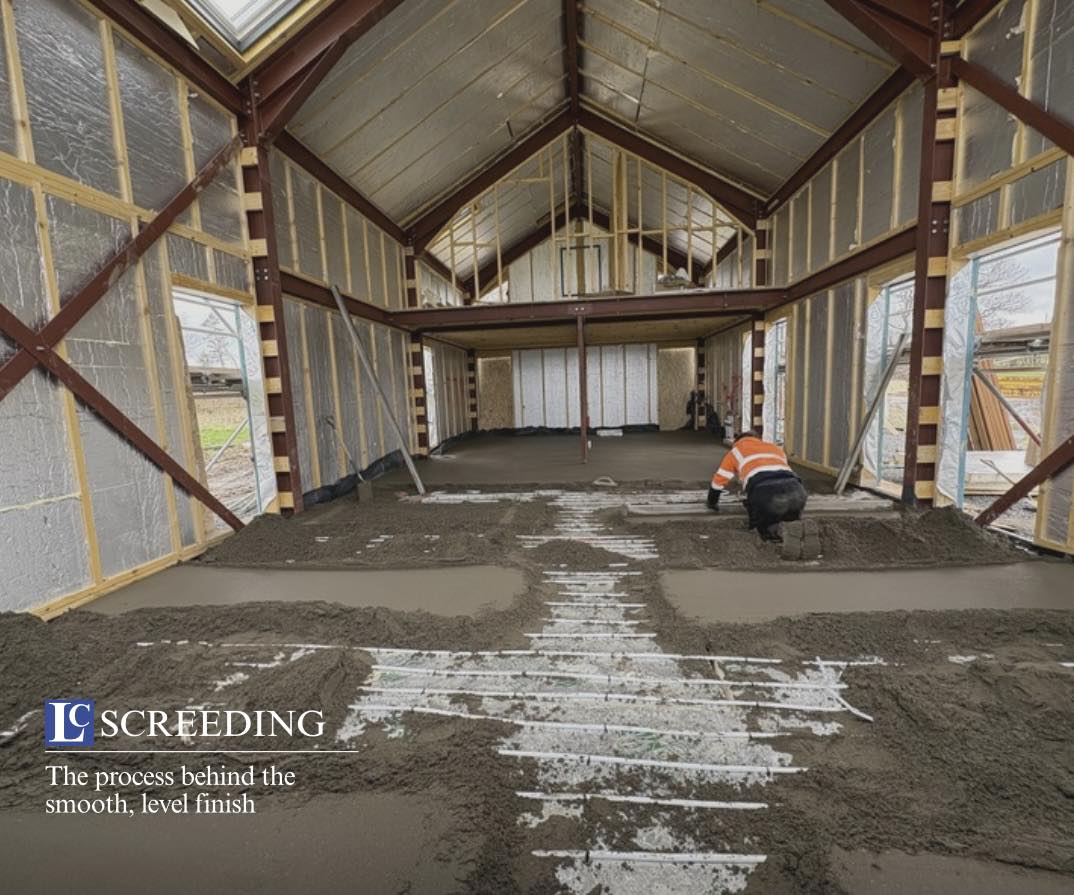
If underfloor heating is being installed, preparation becomes even more detailed. Heating pipes or cables must be securely fixed to prevent movement when the screed is applied. The system is pressure tested before installation and typically remains under pressure during screeding to ensure integrity. Correct pipe spacing and coverage depth are carefully planned to guarantee even heat distribution once the floor is operational.
For bonded screed applications, a primer or bonding slurry is applied to the prepared concrete base. This promotes adhesion and prevents the screed from separating from the substrate. Timing is crucial, as the screed must be installed while the bonding coat is still active.
Finally, level markers or screed rails are set to achieve the required surface regularity standard. Accurate levelling ensures the finished floor is smooth, consistent and ready to receive tiles, wood flooring, carpet or luxury vinyl.
At LC Screeding in Newcastle, preparation is never rushed or overlooked. By carrying out thorough inspections, repairs, moisture control and precise level setting, the team ensures every screed floor installed across the North East of England delivers strength, durability and a flawless finish that stands the test of time.